
Synopsis:
A jerky or off-track garage door signals serious mechanical failure that can lead to safety risks, costly repairs, and sudden breakdowns. Learn the causes, warning signs, and why timely garage door repair in Charleston, SC protects your home and extends system life.
A jerky or off-track garage door is a mechanical failure in progress. It does not fix itself. Each time you operate a door in that condition, you add stress to the rollers, tracks, springs, and opener, and the risk of a sudden, complete failure grows.
Charleston Garage Door LLC has worked with homeowners across Charleston since 2018, and we’ve seen small, fixable problems turn into full system repairs because early warning signs were ignored. We explain what these symptoms mean, what causes them, and why acting early is always the right call. We provide reliable garage door services for homeowners who want safe, smooth, and long-lasting performance.
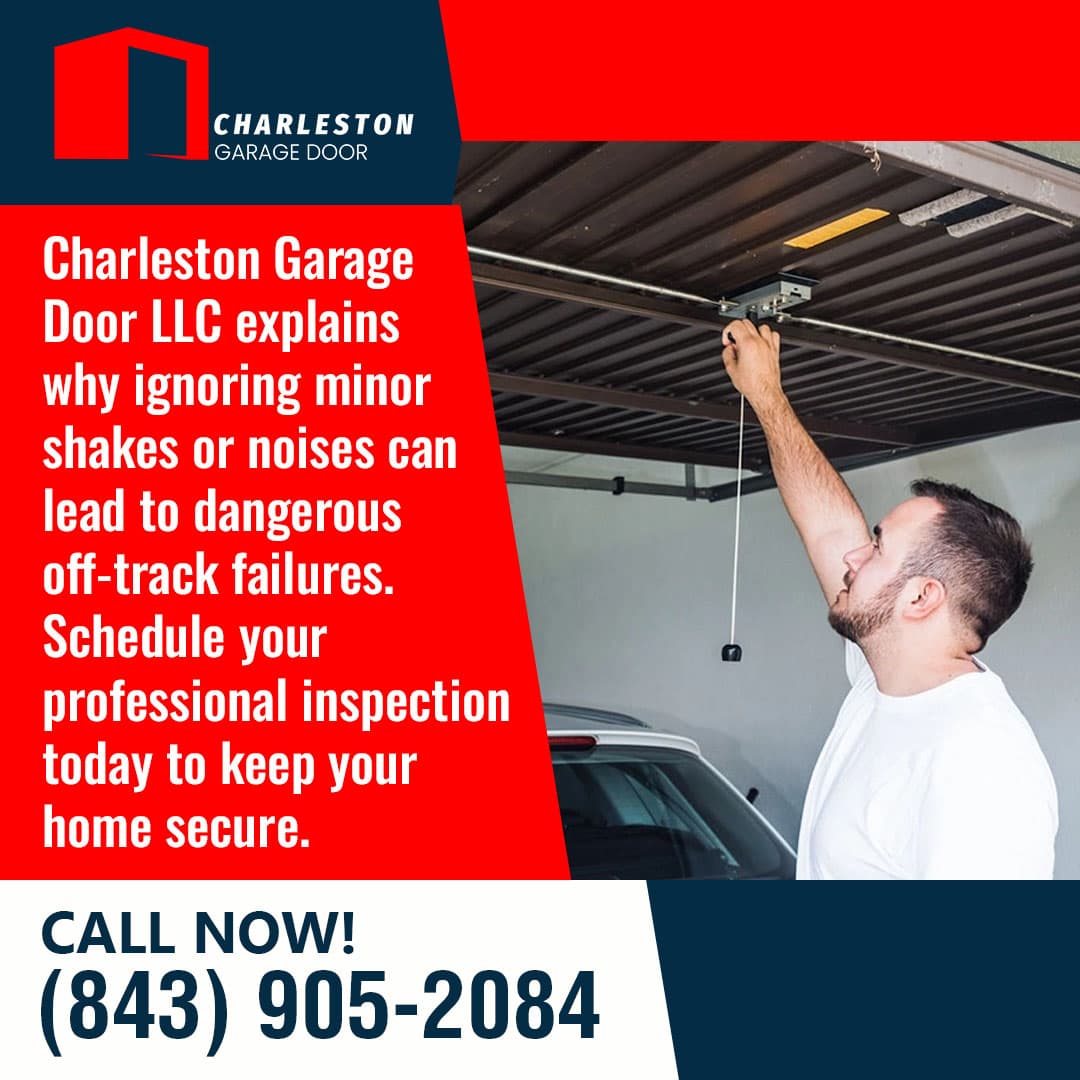
What Does a Jerky or Off-Track Garage Door Actually Mean?
What Jerky Movement Looks Like
A healthy garage door moves in one smooth, continuous motion. If yours doesn’t, the system is under stress. Common signs include:
- Stops and starts during the opening or closing cycle
- Wobbling or shaking as the door travels
- The opener strains or runs louder than usual
- One side lifts higher or faster than the other
Each of these symptoms points to a component that is no longer doing its job. Rollers, tracks, springs, or cables may all be involved.
What an Off-Track Garage Door Means
An off-track door means the door’s rollers have lost their position inside the tracks, breaking the guided path the door depends on to move. Signs include:
- The door looks crooked or tilted in the opening
- Visible gaps along one or both sides of the track
- The door stops partway or won’t move at all
- The opener runs, but the door barely responds
Once the door loses its guided path, it is structurally unstable. Operating it in this condition is unsafe and causes further damage.
What Causes a Garage Door to Go Off Track?
These problems build over time through wear, missed maintenance, and the ongoing stress that coastal conditions place on metal components in Lowcountry homes.
Rollers That Have Worn Down
Rollers are the small wheels that travel inside the tracks. They handle hundreds of cycles every year. A roller that has gone flat, cracked, or lost its ability to turn freely can no longer hold its position in the track. Once a roller starts to bind, it only takes added tension or an uneven load to knock it out entirely. Salt air from the coast speeds up corrosion on metal rollers, shortening their lifespan faster than in inland areas.
Tracks That Have Shifted or Bent
Tracks provide the rigid path the door follows. When a track shifts out of position from a minor bump, loosening hardware, or gradual vibration, the path the rollers travel becomes uneven. A bend as small as a few millimeters creates resistance that builds with every cycle until it causes a derailment.
Springs That Have Lost Tension or Broken
Springs counterbalance the door’s weight so it opens and closes without straining the opener. When a spring weakens or fails, one side of the door grows heavier. That imbalance puts uneven force on the rollers and is a direct cause of off-track events.
Cables That Have Frayed or Slipped
Cables connect to the springs and keep the lift even on both sides of the door. When a cable loses tension or frays, the weight distribution breaks down. The heavier side can drop quickly, pulling the door sideways and off the track in seconds. This is one of the more urgent situations we address during garage door cable repair calls.
Skipped Maintenance
Debris in the tracks increases friction. Parts without lubrication wear faster. Hardware loosens with every cycle. None of these issues is serious on its own, but together they create the conditions for a failure, and Charleston’s humidity and salt air accelerate that timeline.
Why Ignoring These Signs Creates Bigger Problems
Risk of Sudden Failure
A door already showing these signs is working against itself every cycle. The longer it runs in a compromised state, the more likely it is to stop without warning. It could be stuck open at night or jammed shut when you need to leave.
Real Safety Risk for Your Family
The US Consumer Product Safety Commission states that approximately 20,000 emergency department visits are due to garage door-related injuries annually (International Association of Certified Home Inspectors). A typical residential garage door weighs between 130 and 300 pounds. When that weight becomes unguided or unstable, it is a genuine physical hazard, especially for children and pets.
Escalating Repair Costs
A loose roller caught early is a simple fix. Left alone, it bends the track, damages the panels, overloads the opener motor, and stresses the springs. One ignored component failure can turn into a full system repair.
A Security Gap in Your Home
A door that won’t fully close leaves your vehicle, tools, and interior exposed. A misaligned or partially open door compromises the security of your home and everything inside it.
How Charleston’s Climate Makes This Worse
| Climate Factor | Effect on Your Garage Door |
| Salt air from the coast | Accelerates rust on springs, cables, rollers, and tracks |
| Annual average humidity (~72%) | Drives persistent moisture buildup and metal corrosion |
| Storm season wind and debris | Causes impacts that push tracks out of alignment |
| Year-round temperature changes | Expands and contracts metal, gradually loosening hardware |
Research shows that coastal environments with high humidity and salt exposure significantly accelerate corrosion rates in steel components. Springs, cables, and rollers on a Charleston home face more wear than they would in a drier inland city, which is why consistent maintenance matters more here.
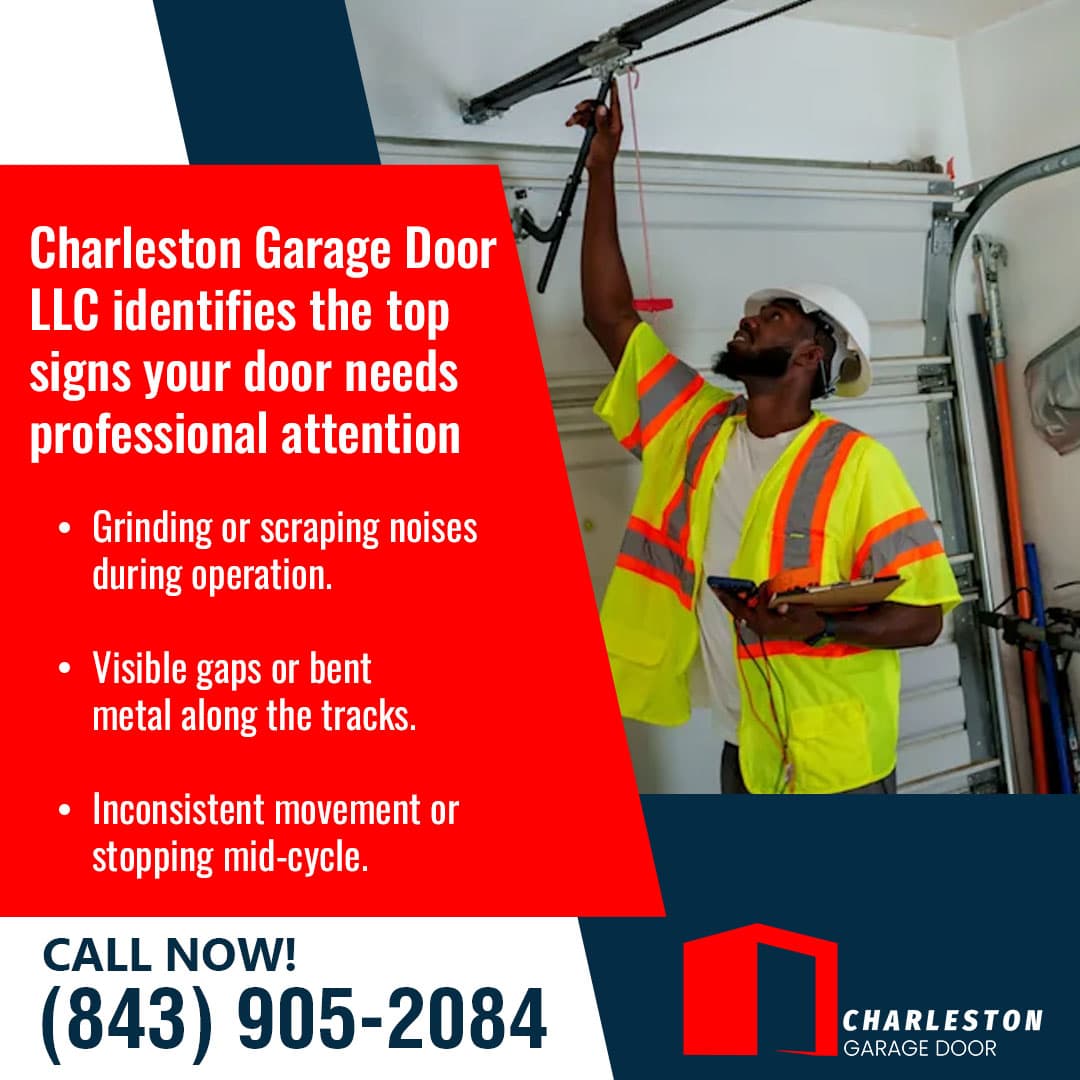
Warning Signs That Mean You Should Call Right Away
Don’t wait if you notice any of the following:
- The door hesitates, shakes, or breaks its motion mid-cycle
- The opening looks uneven, or the door sits crooked in the frame
- You hear new metallic sounds: scraping, grinding, or a rhythmic knock
- The door stalls before reaching fully open or fully closed
- The opener labors noticeably or sounds different from how it used to
Garage door systems work under high mechanical tension. Springs store significant energy. Cables are under constant load. Attempting to reset a roller or adjust a cable without the right tools and training can trigger a sudden, dangerous release. Professional repair is the safest option every time.
Noticed any of these signs? Contact us to schedule garage door repair in Charleston, SC, that homeowners trust for fast, same-day service. We are available 24/7 across Charleston and nearby areas. Call (843) 905-2084
How We Fix Jerky and Off-Track Garage Doors
When we arrive for garage door services, especially an off-track garage door repair call, the first step is always a full system inspection. We check springs, cables, rollers, tracks, opener, and hardware before anything else. Addressing only the visible symptom without understanding the root cause means the same problem returns sooner.
Diagnosis, Realignment, and Roller Replacement
We assess the entire system before picking up a tool. Once we understand why the door came off track, we secure it to prevent movement during the repair. Rollers are brought back into proper alignment, and those that have worn down are replaced with parts matched to your door’s weight. Track sections that have bent or shifted are repositioned to the correct spacing.
Spring and Cable Service
With the door back on track, we verify that the springs provide even tension on both sides and that the cables are properly seated. A door that lifts evenly stays on track. Uneven spring or cable tension is often what causes the original problem, and leaving it unaddressed means it will happen again.
Preventive Tune-Up
Before we leave, we lubricate all moving parts, tighten loose hardware, and test the auto-reverse safety feature. This final pass addresses the wear conditions that contributed to the failure and leaves the door in better shape than when we found it.
Repair or Replace: How to Decide
Repair Is Usually the Right Call When:
- The door came off track once, and other components are in reasonable condition
- Wear on rollers or tracks is early-stage, and the system is structurally sound
- The door is less than 10 to 12 years old with no pattern of repeated failures
Replacement Makes More Sense When:
- The door has gone off track repeatedly despite prior repairs
- Springs, cables, rollers, and tracks all show significant wear together
- Structural panel damage is affecting alignment and performance
- The door is older than 15 years, and service calls are becoming routine
We give you a straight recommendation either way.
Maintenance Habits That Prevent These Problems
- Check the tracks monthly for debris, rust spots, or loose mounting brackets
- Lubricate rollers, hinges, and spring coils twice a year with a silicone-based product. Avoid WD-40, which attracts dust and grit
- Watch for early changes. A new noise or slight catch often shows up weeks before visible damage
- Test the door balance periodically by disconnecting the opener and lifting the door by hand to waist height; a balanced door holds its position without drifting
- Schedule an annual professional inspection, or twice yearly if your home is close to the water
Why Charleston Homeowners Call Us
Since 2018, our team has served homeowners across Charleston, West Ashley, North Charleston, James Island, Summerville, Goose Creek, Hanahan, and nearby communities. We handle all makes and models of residential garage doors, from older wood systems to modern insulated smart doors.
- 24/7 availability, including same-day service, any day of the week
- Quality parts selected to hold up against Lowcountry humidity and salt air
- Honest assessments. We tell you what the door actually needs, with no pressure to spend more
- 4.8-star Google rating earned through consistent work across the Charleston area
Our garage door services are built around safety, durability, and long-term performance.
Frequently Asked Questions
Should I keep using my garage door if it’s jerky?
Stop using it until a technician has assessed the problem. Each cycle in a compromised state adds more wear to the rollers, tracks, and opener, and the risk of sudden failure grows.
What are the most common reasons a garage door goes off track?
Worn rollers, bent tracks, broken springs, and frayed cables are the primary causes. In the Charleston area, salt air and year-round humidity accelerate wear on all these components faster than in drier, inland climates.
How urgent is an off-track garage door repair?
It needs same-day attention. An off-track door is unstable, cannot close fully, and poses a safety risk. Operating it further risks injury and additional damage to the system.
How often should I have my garage door serviced?
Once a year is the general guideline. For coastal Lowcountry homes, twice a year gives better protection against accelerated corrosion on metal components.
Schedule Garage Door Repair in Charleston, SC
For a resident of Charleston, garage door repair can be an emergency. Our team at Charleston Garage Door LLC is available around the clock for garage door services across the Charleston area. We find the real cause and fix it with quality parts built for Lowcountry conditions.
We serve homeowners in Charleston, West Ashley, North Charleston, James Island, Summerville, Goose Creek, Hanahan, and nearby areas. Call (843) 905-2084 or email us at [email protected] for residential garage door repair in Charleston, SC.