
A safe garage door needs three things: working photo-eye sensors, a calibrated auto-reverse feature, and regular professional checks. We follow this standard on every call for garage door services at Charleston Garage Door LLC. Charleston’s humid air wears these parts down fast, so homeowners should also run a quick check every month.
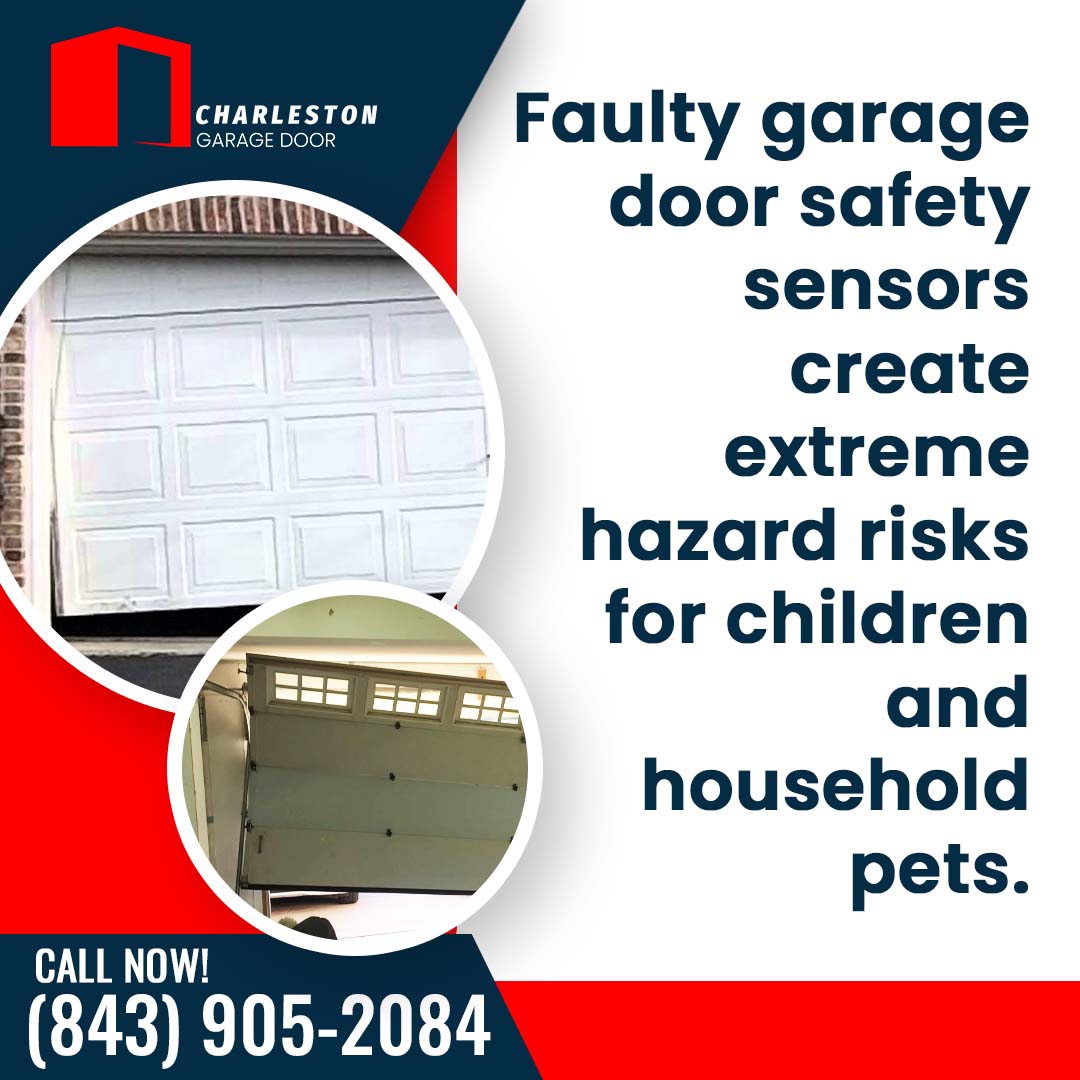
Key Takeaways:
- Auto-reverse testing: The Consumer Product Safety Commission (CPSC) recommends testing an opener’s auto-reverse feature every 30 days using a two-inch block test.
- Federal standard: Federal rules have required residential garage door openers manufactured in the U.S. since 1991 to include entrapment protection under UL 325, including the ability to reverse when the door contacts an obstruction.
- Local wear factor: Charleston’s coastal humidity speeds up corrosion on springs, cables, and sensor wiring, the same parts that control safe operation.
Why Does Garage Door Safety Deserve Your Attention?
A garage door is the heaviest moving part in most homes, often 100 to 400 pounds depending on size and material. That weight passes the same spot where kids and pets cross daily. A worn sensor or poor opener setting will not announce itself until something, or someone, is in its way. At Charleston Garage Door LLC, we treat every garage door repair call as a safety check first.
What Safety Sensors Should Your Garage Door Opener Have?
Most residential garage door openers must have two aligned photo-eye sensors near the floor and an automatic reversing system. So, the door stops and reverses when it detects an obstruction.
Testing the Auto-Reverse Feature
CPSC advises testing a garage door opener monthly by placing a 2-inch block in the door’s path. If the door does not reverse after hitting the block, the opener should be adjusted or repaired. We service LiftMaster, Chamberlain, and Genie openers.
A door that fails this test usually indicates sensor misalignment or a drifted force setting, not a full opener replacement. We diagnose the exact cause before recommending a fix.
How Can You Keep Kids and Pets Safe Around the Garage Door?
Keep the moving door in view while it operates. Store remotes out of children’s reach, not in an unlocked car. A few habits lower the risk:
- Mount the wall control at least five feet off the floor, out of a small child’s reach.
- Treat the remote as a tool, not a toy, and keep it out of reach.
- Leash pets near the garage instead of letting them wander under a moving door.
Worried about garage door safety? Call Charleston Garage Door LLC at (843) 905-2084. We offer same-day garage door repair in Charleston, SC.
How Does Professional Installation and Repair Build Safety In From the Start?
A safe garage door starts with correct calibration. Spring tension must match the door’s weight, or the door will slam, stick, or strain the opener motor.
| Safety Component | What You Can Check | What Requires a Professional |
| Photo-eye sensors | Wipe lenses clean, confirm alignment | Rewiring, sensor replacement or persistent alignment faults |
| Torsion springs | Look for visible wear, gaps or rust | Tension calibration and replacement |
| Cables and rollers | Visual check for fraying, looseness or unusual movement during operation | Cable replacement, track alignment, or repairs involving load-bearing hardware |
| Emergency release cord | Confirm the opener disengages cleanly | Cable or track repair affecting release |
Every garage door install or repair we complete at Charleston Garage Door LLC includes spring tension calibration, and we test opener force settings on every opener job.
What Should a Monthly Garage Door Safety Check Include?
- Test the auto-reverse feature with the two-inch block method.
- Look over springs, cables, and rollers for rust, fraying, or gaps.
- Confirm the wall control and remote both respond and disengage cleanly.
Frequently Asked Questions
Can you bypass or disable garage door safety sensors?
No. Photo-eye sensors have been required on garage door openers since 1993. Disabling them removes a safety feature, so a malfunctioning sensor should be repaired, not bypassed.
Can homeowners install garage door sensors themselves?
Cleaning and aligning sensors is fine for homeowners. Wiring new sensors or replacing a unit needs a licensed technician.
How long do garage door safety sensors typically last?
Photo-eye sensors often last 10 to 15 years, though Charleston’s humidity can shorten that.
When Should You Call a Professional for Garage Door Repair?
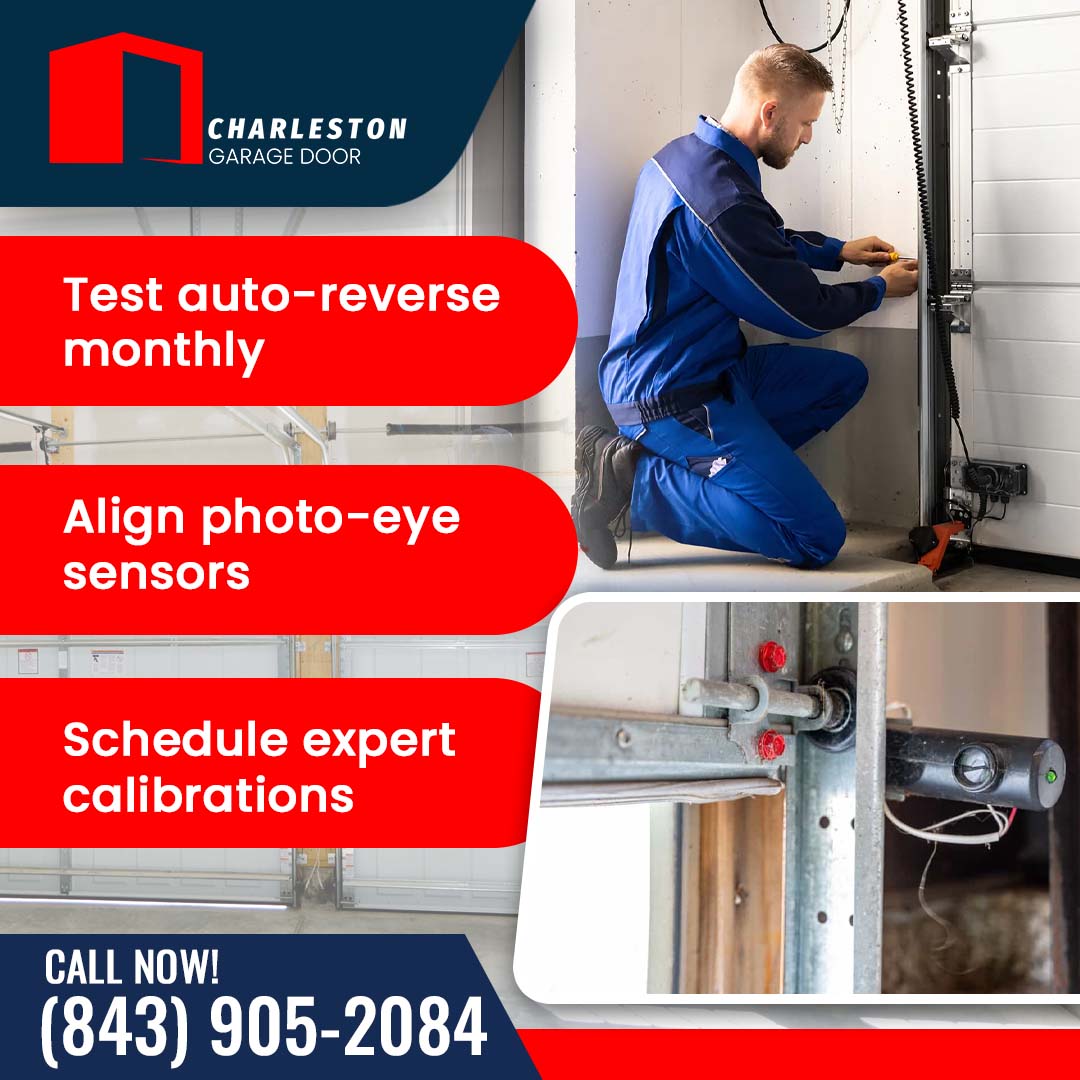
Call right away if the door does not reverse on contact, if cables show rust or fraying, or if the opener strains or stalls mid-cycle. For a safety check before something breaks, contact Charleston Garage Door LLC at (843) 905-2084 or [email protected]. If you are a resident in Charleston, garage door repair can be scheduled the same day.