
Synopsis:
A garage door opener that stops responding can signal electrical issues, worn components, or serious mechanical failures. Charleston Garage Door LLC explains the most common causes, safety risks, and essential steps homeowners should take before calling us for professional repair.
A working garage door opener is something most homeowners depend on every day. Whether you are leaving for work, getting the kids to school, or closing up for the night, you expect the door to respond the moment you press the button. When it doesn’t, it can slow down your routine and raise real concerns about safety and access.
Many homeowners experience opener issues at one point or another, and these problems often start small before turning into full system failures. From weak signals to worn hardware, there are several reasons an opener might stop responding. Knowing what those signs look like can help you decide what to check, what to avoid, and when to call for help.At Charleston Garage Door, we handle opener problems across Charleston every day, and we understand how quickly a minor issue can affect your home. We list the most common causes of a non-responsive garage door opener so that you can make an informed decision about scheduling professional garage door services.
Why Your Garage Door Opener Might Stop Responding
Several factors cause garage door openers to stop working. The issue could involve remote controls, the opener mechanism, or door components. Identifying the source determines your next steps.
Research from the National Electronic Injury Surveillance System shows an estimated 20,000 to 30,000 people experience garage door injuries each year. Many incidents happen when homeowners force malfunctioning systems. Knowing when to stop using your door prevents dangerous outcomes.
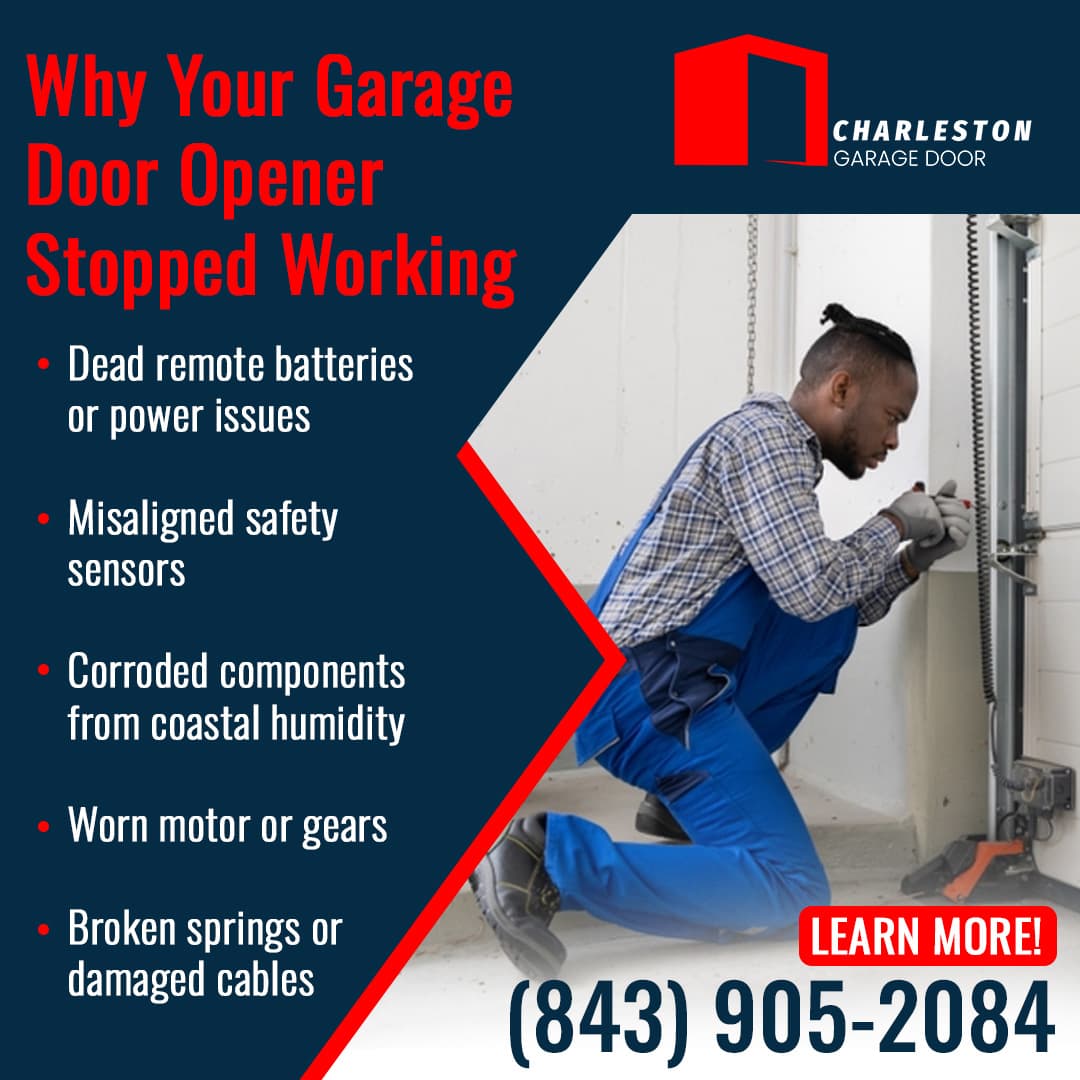
Common causes include electrical problems, sensor malfunctions, and mechanical resistance from the door.
Dead Remote Batteries or Weak Signal
Battery failure accounts for many service calls. Replacing batteries resolves this within minutes. Open your remote’s battery compartment and install fresh batteries.
Electronic interference disrupts signals between remotes and opener units. LED light bulbs, wireless routers, and other electronics create interference. Testing your remote closer to the garage door helps determine if range is the problem.
Your opener’s antenna wire must stay unobstructed for proper signals. Inspect it for damage or incorrect positioning. Complex signal problems are handled through our garage door remote repair service.
Sensor or Safety Eye Problems
Safety sensors prevent doors from closing when objects block their path. These components mount near ground level on opposite door sides. When sensors become misaligned or dirty, your opener may refuse to close.
Check the indicator lights on both sensors. Solid lights mean correct alignment. Flashing lights signal problems. Use a clean, dry cloth to wipe sensor lenses.
Charleston’s coastal location creates extra sensor challenges. Salt air and high humidity cause faster dirt buildup. We recommend monthly sensor cleaning for best performance.
Opener Motor or Gear Failure
Internal components wear down through regular use. When you hear motor sounds but see no door movement, internal parts have failed. This requires professional garage door repair.
Grinding sounds indicate gear damage inside the opener. Humming noise without movement suggests the motor can’t engage. These problems require taking apart the opener to replace damaged parts.
We service every major opener brand. Our vehicles carry common replacement parts for same-day repairs.
Wiring, Circuit Board, or Electrical Issues
Electrical problems vary in complexity. First, confirm your opener has power. Test the outlet with a different device. Check your circuit breaker panel for tripped breakers.
Wiring connects wall switches, sensors, and the opener unit. Loose connections cause unpredictable operation. Charleston’s humid air speeds up corrosion on electrical connections.
The control board manages all opener functions. When this part fails, your opener may act strangely or stop completely. Weather events and power surges damage opener electronics. Lightning strikes send surges through electrical wiring.
Problems With the Door Itself (Not the Opener)
Sometimes the opener works fine, but it can’t move the door. Openers depend on springs to balance door weight. When springs break, cables snap, or tracks shift, the door creates too much resistance.
Spring failure is one of the most common mechanical problems. A loud bang often comes with spring breakage. Without working springs, doors become too heavy to lift safely.
Damaged cables produce similar symptoms. These cables work with springs to spread the door weight evenly. When cables fray or break, doors tilt or won’t move.
Worn rollers increase friction as the door moves. Your opener may shut down to prevent motor damage. Corroded or bent tracks make this worse
When doors jump off their tracks, operation becomes dangerous. Running an off-track door causes major damage. We fix these mechanical issues safely through our residential garage door repair services.
| Problem | What You Notice | Action Needed |
| Broken springs | Won’t open, loud snap, visible break | Stop use immediately |
| Damaged cables | Door hangs unevenly, loose cables | Stop use immediately |
| Worn rollers | Scraping sounds, jerky movement | Schedule repair soon |
| Off-track door | Door at angle, gap in track | Stop use immediately |
| Bent tracks | Door catches or scrapes | Schedule service soon |
Simple Checks You Can Try Before Calling a Professional
Try these safe steps first. These checks reveal obvious issues without creating risks.
Battery and Power Checks:
- Install new batteries in your remote
- Verify the opener has power
- Check if your circuit breaker tripped
- Test your wall button
Sensor Checks:
- Remove anything blocking sensor photo-eyes
- Clean both sensor lenses with dry cloth
- Check that sensor lights show correct alignment
- Make sure nothing blocks the beam
Manual Operation Test: Pull the emergency disconnect cord (red cord hanging from opener). Try lifting the door several feet manually. Balanced doors stay put when lifted halfway. Heavy doors or falling doors mean spring or cable problems.
Visual Inspection: From a safe distance, look at visible components. Check for frayed cables, broken springs, shifted tracks, or damaged rollers. Never touch springs or cables as they contain dangerous tension.
Need help getting your opener working? Call Charleston Garage Door LLC at (843) 905-2084 for fast, reliable service.
When a Non-Responsive Garage Door Opener Becomes a Safety Issue
Broken garage doors create immediate security and safety concerns. Doors stuck open leave your home exposed. Doors stuck closed trap vehicles inside during emergencies.
NEISS statistics show over 7,500 people need emergency treatment for garage door pinching injuries each year. These injuries happen when people force doors with mechanical failures.
Children face the highest injury risks around broken garage doors. Keep children away from doors that operate abnormally. Store remote controls inside vehicles, not where children can reach them.
Trying spring and cable repairs without training creates severe injury risks. Springs under high tension can cause crushing injuries if they release suddenly. Our technicians use specialized tools and have proper training for safe repairs.
How Professionals Diagnose a Non-Responding Opener
We use systematic methods to find root causes. This fixes real problems instead of just treating symptoms.
Our Complete Inspection Process:
- System Check: We examine your complete garage door system, including opener motor, door panels, springs, cables, rollers, tracks, and safety sensors.
- Safety First: We secure the door in place before starting work to prevent accidental movement during repairs.
- Electrical Testing: We confirm power delivery, circuit connections, and control board operation to identify electrical issues.
- Mechanical Assessment: We inspect springs for correct tension, check cables for fraying or damage, and test door balance.
- Safety Verification: We test auto-reverse features to confirm your door meets federal safety standards required since 1993.
This thorough approach identifies why your opener stopped responding and whether other parts need attention before they fail.
Common Repairs for a Garage Door Opener That Won’t Respond
Repairs depend on what we find during diagnosis. Here are the most common Charleston garage door repairs we perform:
Sensor Service: We clean lenses, fix alignment, and test the safety system. We check mounting and inspect wiring for damage.
Remote Reprogramming: We erase old codes and set up fresh connections between your remote and opener unit.
Motor and Gear Replacement: We remove damaged parts and install new components. Modern parts often run quieter than older models.
Track and Roller Service: We straighten tracks, tighten hardware, and install new rollers for smooth door movement.
Cable Replacement: We install new cables with correct tension specifications for safe, smooth operation.
Limit Switch Adjustment: We calibrate limit switches so your door opens and closes to the correct positions without reversing.
24-Hour Emergency Service: We’re available anytime, day or night. When you need immediate help, we respond with fully equipped vehicles.
Should You Repair or Replace Your Garage Door Opener?
Several factors determine whether repair or replacement makes better sense for your situation.
When Repair Makes Sense
Newer openers usually justify repair costs. Single-part failures on recent models warrant repairs. Simple issues like sensor adjustment or remote programming never need replacement.
When Replacement Makes Sense
Older openers with multiple failed parts often need replacement. When repair costs approach half the price of a new unit, replacement becomes more practical.
Benefits of Modern Openers:
- Quieter operation with belt-drive technology
- Better safety features and auto-reverse systems
- Smart home connectivity for phone control
- Battery backup systems during power outages
- Enhanced security with rolling code technology
According to industry experts, modern garage door openers offer improved reliability and safety features compared to older models. We help you evaluate both options and make the best decision for your home and budget.
Why Charleston’s Climate Makes Opener Issues More Common
Charleston’s coastal location creates unique challenges for garage door openers. High humidity, salt air, and storms speed up electronic component wear.
Humidity and Opener Corrosion: Coastal humidity speeds up corrosion on opener components. Metal gears, drive chains, and motor housings corrode faster near the ocean. Electrical connections inside opener units deteriorate more quickly in humid coastal air.
Electrical Component Damage: Moisture affects garage door opener electronics severely. Circuit boards and control panels corrode when exposed to humid coastal conditions. Charleston experiences more opener electrical failures than drier inland regions.
Storm and Power Surge Damage: Storms and power surges damage opener circuit boards regularly. Lightning strikes send electrical surges through home wiring. Wind-driven rain enters garages during severe weather, speeding up corrosion on opener mechanical parts.
Why Choose Charleston Garage Door LLC for Opener Repair?
We’ve served Charleston, SC, and surrounding communities since January 2018. Owner Chen Perets and our experienced team understand how the coastal climate affects garage door openers.
What Sets Us Apart:
- Fully Equipped Service: Our technicians arrive with complete equipment and parts for immediate repairs
- All Major Brands: We work with LiftMaster, Chamberlain, Genie, and all other major opener brands
- 24/7 Availability: We’re available around the clock for emergency opener repairs
- Quality Parts: We use professional-grade components engineered for coastal durability
- Proven Results: Our 4.8-star Google rating demonstrates consistent customer satisfaction
Service Areas: Charleston, West Ashley, Sam Rittenberg, North Charleston, Summerville, James Island, Nexton, Goose Creek, Hanahan, Ladson, and nearby areas throughout the Charleston region.
Frequently Asked Questions About Garage Door Openers Not Responding
Why won’t my garage door opener respond to the remote?
Battery depletion causes most remote problems. Replace batteries first. Check for signal interference from nearby electronics. Verify the opener has power. Sensor misalignment can also prevent proper response.
How do I know if my opener motor burned out?
Listen for humming sounds without door movement. Burning smells indicate motor problems. Complete silence when pressing controls suggests motor failure. When the motor runs, but nothing moves, internal gears may be stripped.
Can humidity affect garage door sensors?
Yes. Charleston’s coastal humidity causes corrosion on sensor wiring. Moisture accumulation on sensor lenses prevents correct function. Regular cleaning and professional maintenance help avoid problems with sensors in coastal areas.
Why does my opener click, but nothing moves?
Clicking without movement means power reaches the opener, but mechanical parts can’t engage. This could signal stripped internal gears, broken drive chains, or mechanical problems preventing operation of the garage door.
When should I call a professional?
Call professionals for anything involving springs, cables, or electrical wiring. If battery replacement and sensor cleaning don’t fix the problem, a professional diagnosis is needed. Never attempt repairs on high-tension components yourself.
Is it dangerous to keep using a half-working opener?
Yes. Openers working intermittently have developing problems that will worsen. Continued use damages additional components or creates safety hazards. Our 24/7 emergency service can address urgent opener problems immediately.
Get Your Garage Door Opener Working Again
A non-responsive garage door opener means something needs attention. Quick problem identification prevents bigger issues and keeps your home secure. Regular maintenance catches problems before complete failures happen.
Monthly visual checks combined with yearly professional service extend your garage door opener’s life. Charleston’s coastal climate makes maintenance even more important.
Here is a review by A. Page about our garage door service: “Great customer service. Installer of our garage door opener Sean was great in June of 2024. Kind, friendly, really knew what he was doing. Efficient, personable and respectful…..Also we had a problem getting our opener to work after a power outage on 6/9/2025. Called the company about the problem. Answered right away. Referred me to someone in our area. Tech Lucas came first thing on 6/10/25. Solved the problem immediately. He also was very knowledgeable, kind, respectful, efficient and personable. I highly recommend this company!”
Charleston Garage Door Repair You Can Rely On
Don’t let a broken opener disrupt your routine or compromise security. Charleston Garage Door LLC delivers fast, professional service throughout the Charleston area. Our skilled technicians handle everything from simple remote issues to complete opener replacements.
What We Offer:
- 24-hour emergency service for urgent situations
- Same-day repairs for most problems
- Premium parts with expert workmanship
- Clear assessments and honest communication
- Serving Charleston homeowners since January 2018
Ready to get your opener fixed?
Need fast garage door service? Contact Charleston Garage Door at (843) 905-2084 or [email protected] for garage door repair in Charleston, SC. We’re ready to restore your garage door opener quickly and safely.